The Story
Three years. Two albums. One sound that still echoes under the Huntington pier.
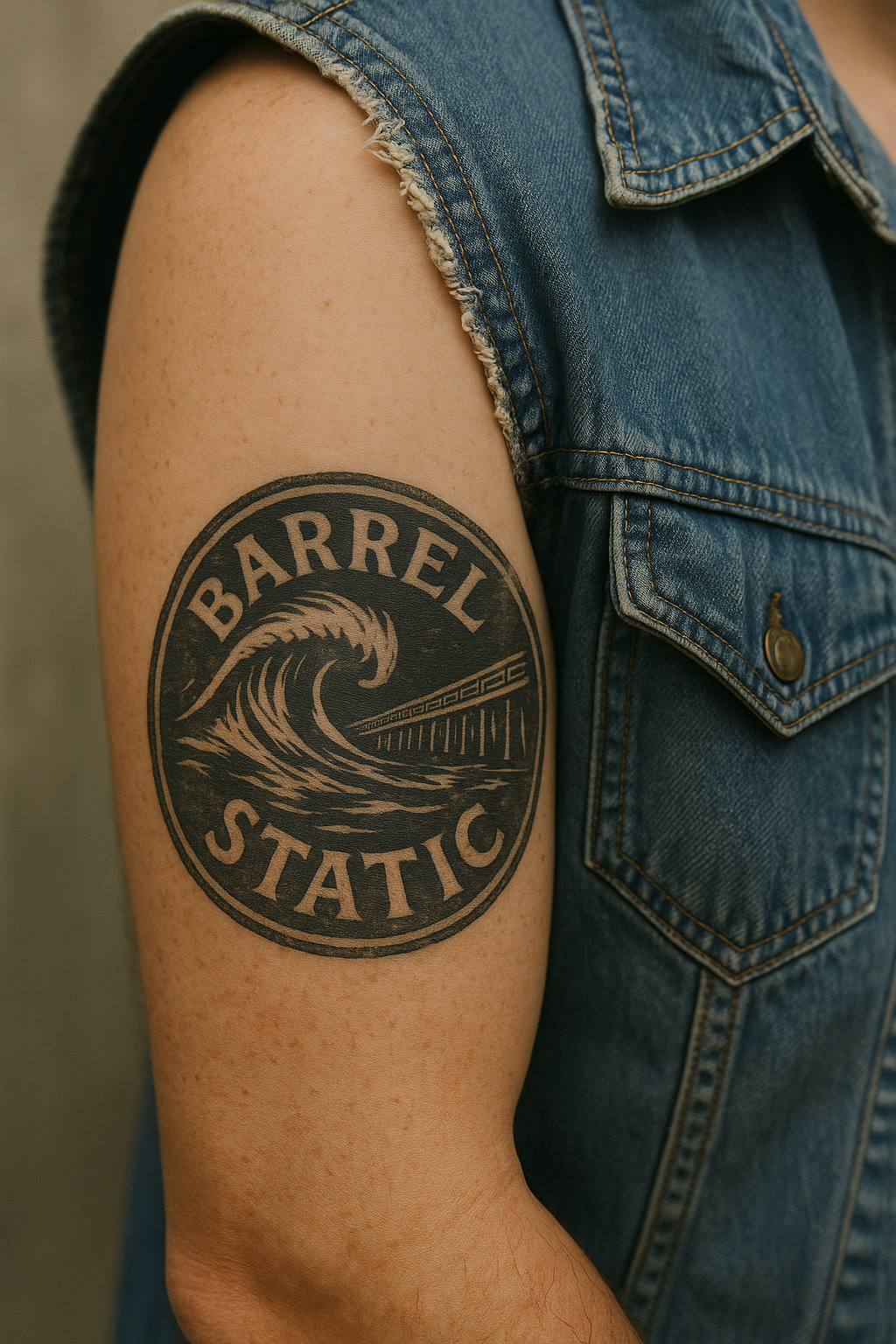
The Origin of Barrel Static (1986–1987)
The true story of how five misfit kids from Orange County built the Grime Surf Rock sound
It started in Huntington Beach during the brutal heat wave of July 1986 — Santa Ana winds blowing at the wrong time of year, offshore gusts snapping signs loose, tar balls sticking to everyone's feet, and a weird electric pressure in the air that made the sunsets feel radioactive.
Kai and Lana Rios, brother and sister, were the foundation long before they knew it.
Their parents were washed-up surf rock musicians from the late 50s/60s — backup guitar for small bar shows, harmony singer for beach dives — and the Rios garage was packed with broken amps, cracked guitars, and milk crates full of vinyl no one played anymore.
Kai surfed every dawn. Lana sang every night.
They weren't trying to form a band. They were trying to survive the mess their parents left behind.
Everything changed the night Kai wiped out on a heavy south swell under the HB Pier. He went under too long, came up shaking, and swore he could hear static under the water.
That near-drowning is what gave him the phrase:
He wrote it on a wax-stained notebook. Lana picked up the words and said:
What happened next wasn't fate — it was chaos, OC-style.
Lana found Mira behind the Galaxie Arcade in Santa Ana soldering wires into a broken toy keyboard. Mira had recorded the metal groans and electrical clicks the Santa Ana winds made against street signs the night before — and when she played them through her hacked keyboard, it sounded like a haunted surf riff.
Lana didn't even ask.
"You're in our band."
Mira didn't say yes. She didn't say no either. She just showed up to the garage with a backpack full of broken electronics and changed everything.
Kai heard Jett before he met him. A punk venue in Anaheim had thrown Jett out back for "destroying the set." Jett was banging on a dented dumpster, playing the weirdest, angriest broken-grime rhythm Kai had ever heard.
Kai: "You wanna play something real?"
Jett: "Got sticks. Will travel."
He joined without asking what the band sounded like. He assumed "loud," and he wasn't wrong.
Bryce wasn't a musician first — he was a Newport Beach street racer. Loud mouth, louder engine. He rolled up to the Rios garage because Lana bet him he wouldn't show.
He showed up. In his red IROC-Z28. At full volume.
He plugged in a bass Kai's dad left behind and played a sliding, rumbling line that sounded exactly like his car accelerating.
They didn't pick Bryce. His tone picked them.
Dane was Laguna Beach's quietest problem. He rebuilt gear in a canyon shack filled with surfboards, incense smoke, and half-working electronics. One night, a strange, sharp, reverb-laced guitar line echoed through the canyon.
Lana whispered, "Whoever's playing that? That's our lead."
They found him tuning a Jaguar held together with solder burns and surfboard resin. Dane barely looked up when they asked him to join.
He just said: "As long as I don't have to talk."
Perfect.
The first full jam happened at midnight, Rios garage door wide open, ocean breeze pouring in, amps buzzing, Mira's malfunctioning synth spitting static. Tar balls still stuck to Kai's heel from surfing earlier that day.
No one knew how to blend surf rock, grime beats, punk energy, and weird street samples.
But when Kai played the riff he wrote after nearly drowning… When Lana sang the first improvised line… When Jett smashed the beat apart and rebuilt it mid-bar… When Bryce slid the bass so hard it shook the garage door… When Dane's guitar screamed like electricity on a wet cliff…
Everything clicked.
Not polished. Not correct. Not even on purpose. But alive.
Jett dropped his sticks and yelled:
That's how Grime Surf Rock was born.
Their first real gig was at The Gnarly Tide Bar in Ventura — a tiny surf dive where the only rule was "don't unplug the fridge or the beer goes warm."
Half the crowd were surfers. The other half were punks who hated surfers.
Barrel Static hit the stage, tangled cords, buzzing amps, no soundcheck.
They opened with "South Swell Surge."
The entire room went silent for four seconds — then exploded.
A pirate radio station (K83 The Riptide) recorded the show illegally and aired it. By the next weekend: Skaters had copied the tape. Surfers were blasting it from boomboxes. Laguna kids claimed them. Santa Ana claimed them. HB called them hometown heroes.
And Barrel Static stopped being a garage experiment.
They became the band that made surf rock dangerous again.
The band was messy, reckless, and brilliant:
They didn't match. They didn't blend. They collided.
And the collision created a sound no one had heard before — sunshine on top, grime underneath, OC danger in every beat.
The Night of the Barrelhouse Riot
1987 — The show that almost killed them. And the song that wouldn't die.
Summer 1987. Six months since their first chaotic show at The Gnarly Tide Bar. Barrel Static was no longer a secret.
The buzz had spread from pirate radio to underground zines to high school parking lots across Southern California. But the band was still broke, still unsigned, still grinding through small gigs for gas money and free drinks.
Then a promoter named Felix "The Fixer" Aguilar called Lana with an offer:
The Barrelhouse was a dive bar in Long Beach — part surf hangout, part punk venue, part illegal gambling den. The walls were coated in stickers, the ceiling was warped from humidity, and half the locals had been banned at least once.
Problem was: The Barrelhouse didn't want surf rock. Their regulars were hardcore punks, metalheads, and bikers who didn't trust anyone from Orange County.
Felix had told the bar owner one thing: "They sound angry enough."
He had told the band another:
Neither side knew what was coming.
The band rolled in around 10 p.m. No soundcheck. No backstage. Just a loading dock, a busted PA system, and a crowd already half-drunk and agitated.
Jett looked out at the room and muttered:
The setlist was supposed to start with "Neon Breaker" — a solid, groove-heavy opener. But halfway through the first verse, the PA crackled, feedback screamed, and someone in the front row threw a can at the stage.
Lana didn't flinch.
She grabbed the mic stand, glared at the crowd, and said:
The crowd jeered.
Dane looked over at Kai — and Kai nodded. No words, just a nod.
Mira's synth started glitching — loud, dissonant, angry.
Kai ripped into the opening riff of "Barrelhouse Riot" — except the song didn't exist yet.
Not formally.
It was just a half-finished jam they'd messed around with in the garage — a chaotic noise piece with no structure, no verses, just surf-grime chaos turned up to breaking point.
That night, it became something else.
Here's what witnesses said:
The opening riff hit — and someone near the bar snapped. A guy in a leather jacket shoved someone. Drinks flew. Bodies collided.
Lana started screaming lyrics she made up on the spot:
The crowd surged forward. One wave, then two. A mosh pit exploded in the center of the room.
Jett was drumming so hard one of his sticks flew into the crowd — and he didn't stop. He grabbed a broken mic stand and started beating the hi-hat with the jagged end.
Bryce's bass rattled the bar shelves. Three bottles fell and shattered.
Dane's amp started smoking — but he kept playing.
Mira grabbed a broken speaker cable and ran it through her synth to create a looping feedback siren that sounded like a police chase.
And somehow — in the middle of all this destruction — the crowd started chanting the chorus Lana had just invented:
RIOT IN THE RAFTERS!"
The song didn't end. It mutated.
By the 10-minute mark, the bar owner pulled the plug on the PA — but the amps were running on their own power, and the crowd was screaming so loud it didn't matter.
Someone in the back yelled, "Burn the house down!"
Lana screamed back: "We already did!"
Security tried to clear the room. The crowd pushed back. Someone kicked over a pool table.
The police showed up at 11:45 p.m. — sirens blaring over Mira's synth loop like a perfect accidental harmony.
When the band finally stopped — not because they wanted to, but because the cops ordered everyone outside — the Barrelhouse was trashed.
No one was seriously hurt. But a dozen people had bruises. The stage was cracked. The drum kit was destroyed. And Dane's amp was literally smoking.
Felix "The Fixer" Aguilar was standing in the parking lot, laughing like a maniac. He looked at Lana and said:
The next morning, three underground zines ran the same headline:
The band was banned from Long Beach.
But the bootleg recording of the show — captured on a handheld tape recorder by a kid in the back row — started circulating immediately.
That chaotic, half-improvised song became "Barrelhouse Riot."
Kai refined the riff. Lana rewrote the lyrics using notes she scrawled on a napkin the night of the show. Mira cleaned up the synth loops. Jett recorded new drums on a kit held together with duct tape.
By the time Static in the Tide was recorded in the fall of 1987, "Barrelhouse Riot" was the centerpiece.
It wasn't just a song.
It was a legend.
And every time they played it after that night, the crowd sang the same chant — because they knew what happened the first time:
How It Ended
Whatever Happened to Barrel Static?
If you lived anywhere along the Orange County coastline between 1986 and 1989, you probably remember the name Barrel Static—the Huntington Beach surf-punk outfit that briefly lit up the local scene with their strange hybrid of surf rock, grime-influenced beats, and raw adolescent fire.
For a few fast years, the band felt unavoidable. Their debut, Static in the Tide, made waves (literally and figuratively) among surf shops, garage parties, and pirate radio stations. The 1989 follow-up, Waves and Wheels, earned them a cult following from Santa Barbara to San Diego. Kids wore their hastily screen-printed shirts. Bars booked them for rowdy, unforgettable nights. Even KROQ played their track "Neon Breaker" enough that the band seemed poised for a breakout.
And then, as suddenly as they arrived, they vanished.
No farewell show.
No press release.
No scandal to feed the rumor mill.
Just silence.
So, six years after their last performance, the Examiner set out to answer the simple question: Whatever happened to Barrel Static?
The Rios Siblings: New Lives, Old Talent
Band founders Kai and Lana Rios—once the magnetic center of the group—are still local, though you'd never guess their musical past by looking at them.
Insiders say the siblings remain close—something rare in bands that burn out young.
Mira Solano: The Quiet Genius
The band's resident synth-alchemist, Mira Solano, traded circuitry of sound for actual circuitry. Now 25, she works in IT security for a tech firm in Irvine.
Coworkers describe her as "brilliant, quiet, and impossible to read." She still keeps an old tape recorder in her desk drawer. She does not play music publicly anymore.
Dagger Collins: The Canyon Ghost
Lead guitarist Dane "Dagger" Collins always hated the spotlight. Once known for his shimmering reverb lines and canyon-echo tremolo, he now shapes custom surfboards in a shack tucked off Laguna Canyon Road.
His clientele is loyal and hushed. His waiting list is a year long. A small sign on the shop wall reads: "No demos, no requests, no autographs."
He declined to be interviewed. Reportedly, he is happy.
Jett Navarro: Still Making Noise, Just Different
Barrel Static's volatile drummer, Jett Navarro, 27, now works as a heavy equipment mechanic in Anaheim.
"I still hit things for a living," he told the Examiner with a laugh. "I just get paid better for it."
He didn't say much about the band years, except: "We were kids. Loud ones. It was fun until it wasn't."
Bryce Vega: From Basslines to Engine Lines
Once the band's bassist—and occasional late-night street racer—Bryce Vega, 29, runs a high-performance auto shop in Costa Mesa.
Friends say he's mellowed. Workers say he's demanding but fair. A dusty photo of the band sits inside his toolbox drawer, face-down.
He didn't comment on his relationship with Lana, past or present.
So Why Did They Break Up?
Everyone the Examiner spoke to gave a different piece of the puzzle:
- "Too much pressure, too fast."
- "They were more fragile than they seemed."
- "Life pulled them in different directions."
- "Some things burn too hot to last."
One thing is clear: There was no dramatic implosion. No lawsuits. No betrayal. They simply outgrew the chaos that created them.
The Legacy They Didn't Know They Had
Though they may not realize it, Barrel Static left a small but stubborn mark on SoCal music. A few current surf-punk acts cite them as an influence. Some old fans still trade battered cassettes. A Ventura dive bar still has their name carved into the bathroom door.
They were kids who made something wild, weird, and honest. And then they stepped back into real life without looking back.
Maybe that's the most Orange County ending possible.
And for a brief, bright moment between 1986 and 1990, they gave OC a sound nobody had ever heard before—and probably never will again.